
6: What’s Wrong with This Picture?
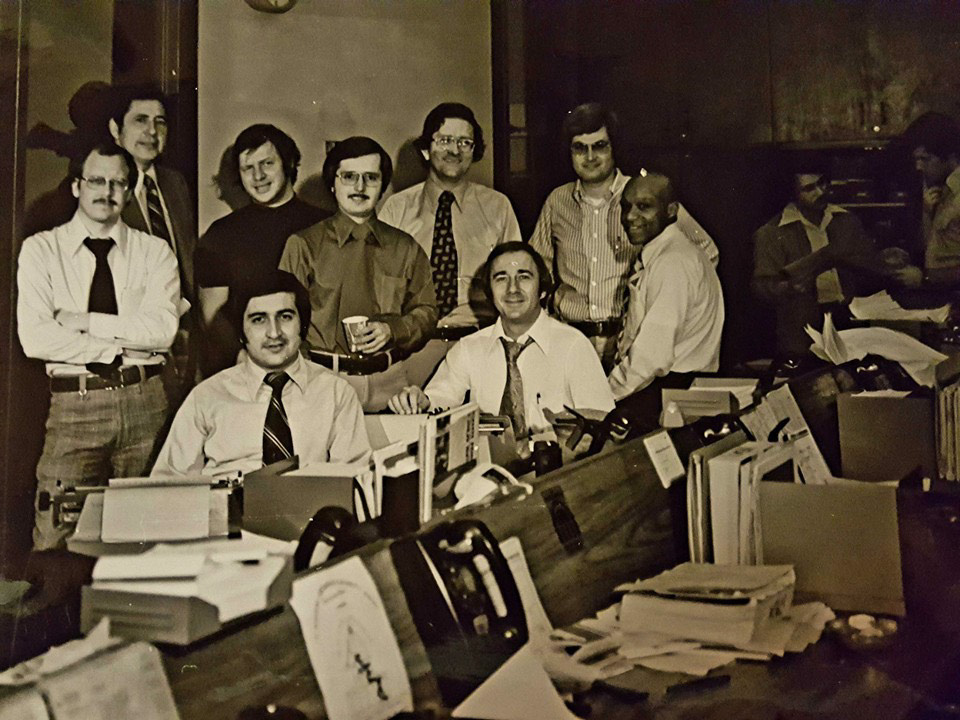

This was the first newsroom where I worked as a TV reporter, KXTV Sacramento. There was one woman on the reporting staff, a former Miss Texas. But she worked strictly on the Noon News Show which targeted housewives. This photo was probably taken in the afternoon, after she had gone home. Clearly, what’s missing in that newsroom photo from 1970 are women. There was only a handful of women reporters and anchors in the 1970s and 80s. Most were relegated to “women’s stories,” fashion, cooking, raising children.
The good news is everything has now been turned upside down. Once given the opportunity, many women have proved to be excellent television news reporters. Many have won Emmys. In fact, women now represent more than 53 percent of TV news reporters according to the Radio-Television News Directors Association. Still, only about 26 percent of TV News Directors are women.
Our newsroom in Sacramento was a small news operation, fewer reporters than the competition. We tried to find unique stories that would interest the audience. I once spent a week living and reporting on a hippie commune in Mendocino County on the rugged North Coast of California. They lived in nature and often paraded around naked. There were a lot of psychedelic drugs.
A couple of weeks after airing the series, a bunch of the hippies visited me at my house in Sacramento. They camped out for a week in my back yard, building a fire to cook food. My wife was concerned, but she welcomed them. It was a 1970s kind of thing, everyone was welcome.
One of our reporters quit to become a priest. He once covered a murder story and closed the report by saying, “May the Lord have mercy on the victims’ souls, and the Lord will no doubt forgive the suspect.”
Still, there was a labor dispute at the station. We were paid about 25 percent less than reporters at the NBC and ABC stations. We signed pledge cards and voted to bring in a unit of AFTRA, the broadcaster’s union. I started the effort and led our side in negotiations. We received a healthy salary increase.
However, some months later, my boss took me out to lunch and told me they didn’t want me at the station any longer.
I was fired.
Several years later, I was told by a former colleague that the station convinced the reporters to de-certify the union in exchange for salary increases. They got rid of the union, and not long afterward I was told that many of them were fired.